









































PCP vs gas ram systems in air guns: the differences
PCP vs gas ram systems in air guns: the differences
One of the most important decisions when choosing an air gun is whether to go for PCP (pre-charged pneumatic) or a gas ram system such as IGT (Inert Gas Technology) or Nitro Piston. Both systems have their strengths and weaknesses, and the right choice depends on your needs, how you shoot and what you prefer. In this guide we look at the differences between the two technologies, how they work, and what to consider before you choose your air gun.
What is PCP (pre-charged pneumatic)?
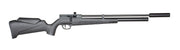
PCP is one of the most popular air gun technologies and is used especially by experienced shooters and competition shooters. PCP air guns use compressed air stored in an air cylinder in the gun, which gives multiple shots at consistent power.
How does PCP work?
-
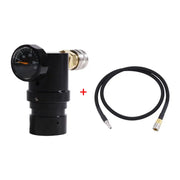
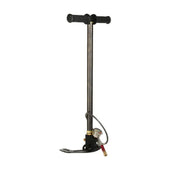
The gun's air cylinder is filled with a hand pump, scuba tank or high-pressure compressor.
-
When you pull the trigger, a small amount of air is released, driving the pellet out of the barrel.
-
Many PCPs are regulated, meaning the air is delivered at a stable pressure for every shot, which improves accuracy.
Advantages of PCP systems:
✅ High accuracy and consistent shots – Constant pressure means minimal variation in power from shot to shot.
✅ High capacity – Fires multiple shots per fill (typically 30–100 depending on the gun).
✅ Low recoil – No spring movement, which makes for steadier shooting.
✅ Potential for high power – PCP air guns can shoot at higher energy than other systems.
Disadvantages of PCP systems:
❌ Needs a fill source – You need a compressor, pump or air tank to fill the cylinder.
❌ Higher starting cost – PCP air guns are often more expensive than springers and gas rams.
❌ More maintenance – Pressurised systems can develop leaks and need regular inspection.
What are gas ram systems (IGT, Nitro Piston and others)?
Gas ram systems are a newer technology that replaces the traditional spring-powered mechanism. Instead of a spring, these guns use a sealed gas cylinder that builds the pressure to fire the pellet.
How do gas ram systems work?
-
When you cock the gun, you compress a gas-filled cylinder.
-
When you pull the trigger, the stored energy is released and drives the pellet forward.
-
The system gives a smoother power curve than traditional spring systems.
Advantages of gas ram systems:
✅ More durable than spring systems – No mechanical spring to wear out over time.
✅ Less recoil – Smoother shooting than traditional springers.
✅ Less sensitive to temperature – Unlike CO2-powered systems, gas rams are not significantly affected by cold.
✅ Faster follow-up – Less vibration makes it easier to get back on target after the shot.
Disadvantages of gas ram systems:
❌ Less consistent than PCP – There can be small variations in power over time.
❌ Lower shot capacity – Every shot has to be cocked by hand, so you only get one shot at a time.
❌ Not as powerful as PCP – Limited to mid-range power levels.
Which system suits you best?
| Feature | PCP | Gas ram (IGT/Nitro Piston) |
|---|---|---|
| Accuracy | High accuracy, consistent shots | Moderate accuracy, less consistent |
| Recoil | No recoil | Low recoil |
| Capacity | 30–100 shots per fill | One shot at a time |
| Maintenance | Pressure needs monitoring | Minimal maintenance |
| Price | More expensive | Cheaper |
| Power source | Needs an air compressor or pump | No external supply needed |
| Best for | Target shooting, hunting, long range | All-round shooting, durability |
Conclusion
The choice between PCP and a gas ram system depends on your needs:
-
Choose PCP if you want the best accuracy, high capacity and consistent shots.
-
Choose a gas ram (IGT/Nitro Piston) if you want a simple, durable, low-maintenance air gun.
Both technologies have their place in the air gun world, and the right choice comes down to how you shoot and your budget.


