


















How does barrel design affect air gun accuracy?
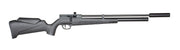
Barrel design is one of the most decisive factors for accuracy in an air gun. Everything from barrel length, bore diameter and rifling (the grooves inside the barrel) to materials and crown profile affects how the pellet travels and hits the target. In this guide we take a closer look at how the different aspects of barrel design affect accuracy, and how you can optimise your air gun for maximum precision.
Rifled vs smoothbore barrel – which is best?
Rifled barrel
Most air rifles and air pistols that shoot pellets use a rifled barrel, with spiral grooves cut inside the bore. The grooves put a spin on the pellet, which stabilises it in flight and improves accuracy.
✅ Advantages:
-
Stabilises the pellet in flight.
-
Reduces deviation at long range.
-
Improves accuracy, especially at higher velocities.
❌ Disadvantages:
-
Needs precisely made pellets to work at its best.
-
Can cause more drag at lower velocities.
Smoothbore barrel
Smoothbore air guns are mainly used for BBs (round steel balls). Because BBs do not have the aerodynamic shape of a pellet, they gain nothing from rifling and can instead become unstable in flight.
✅ Advantages:
-
Less barrel wear over time.
-
Well suited to short-range and casual shooting.
❌ Disadvantages:
-
Low accuracy at longer range.
-
BBs are more affected by wind and drag.
➡ Conclusion: If accuracy is your main goal, choose a rifled barrel and use well-made pellets.
Barrel length – are longer barrels more accurate?
Barrel length affects how long the pellet spends in the barrel, which can make a big difference to stability and accuracy.
-
Short barrel (100–300 mm):
-
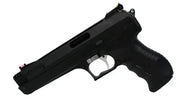
Mostly used on air pistols.
-
Easy to handle, but a less stable pellet trajectory.
-
Best for shooting at short range (<15 metres).
-
-
Medium barrel (300–500 mm):
-
Standard on many air rifles.
-
A good balance between compactness and accuracy.
-
Best for shooting at 15–40 metres.
-
-
Long barrel (500–700 mm):
-
Increases pellet stability and energy.
-
Can be more accurate, but can also lose energy if the air pressure drops before the pellet leaves the barrel.
-
Ideal for long-range shooting (40+ metres).
-
➡ Conclusion: A barrel that is too short can reduce accuracy, while one that is too long can reduce velocity. The optimal length depends on the gun's power source and what it is intended for.
Bore diameter and pellet fit
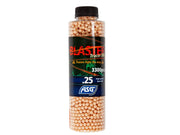
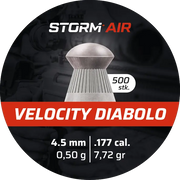
The bore diameter must match the pellet calibre exactly. If the bore is too wide or too tight, accuracy suffers:
-
Bore too wide:
-
The pellet can bounce around in the barrel, which reduces accuracy.
-
A poorer air seal means lower velocity.
-
-
Bore too tight:
-
Creates more friction and lowers velocity.
-
Can damage the pellet and change its flight path.
-
➡ Conclusion: Use high-quality pellets that match your barrel's calibre precisely for the best accuracy.
Barrel material – does it matter?
The material the barrel is made from can affect both durability and accuracy.
-
Steel:
-
The most common material in air gun barrels.
-
Durable and resistant to wear.
-
-
Brass:
-
Often used in high-end PCPs to reduce friction.
-
Needs more care to prevent oxidation.
-
-
Carbon fibre-sleeved:
-
Lighter than steel, but still very durable.
-
Found mainly on competition models.
-
➡ Conclusion: Most shooters will be well served by a steel barrel, while competition shooters may consider brass or carbon fibre-sleeved barrels for better accuracy.
Crown profile – how does the muzzle end affect accuracy?
The crown is the very end of the barrel, where the pellet leaves the bore. If the crown is uneven or damaged, air can escape asymmetrically, which affects accuracy.
Types of crown:
-
Flat crown: Simple, but sensitive to damage.
-
Recessed crown: Protects against knocks and ensures an even airflow.
-
Match crown: Designed specifically for high-precision guns, maximising symmetry as the pellet exits.
➡ Conclusion: If you want maximum accuracy, make sure the barrel's crown is flawless and correctly cut.
How to optimise the accuracy of your air gun
-
Use a rifled barrel for a stable pellet trajectory.
-
Choose the right barrel length for your gun's power source and shooting distance.
-
Make sure the pellets fit the barrel precisely to avoid air leakage and energy loss.
-
Avoid damaging the crown to ensure a clean, symmetrical pellet exit.
-
Use quality components and keep the barrel clean for consistent shots.
Conclusion
Barrel design plays a decisive role in the accuracy of your air gun. A rifled barrel, the right barrel length, precisely matched pellets and a perfectly cut crown can be the difference between mediocre and outstanding accuracy. By understanding and optimising these factors, you can improve your shooting and get better results on the range.


