

















Airgunpedia Choosing your gear
Hawke – Know Your Scope: "Long-Range Shooting"
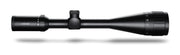
Using Hawke's Frontier models as our example, we describe the features of a riflescope built for long-range shooting.
A modern riflescope for longer distances has a number of clever features that help the shooter place precise shots whatever the distance to the target. The Frontier series from British manufacturer Hawke offers all of these features.
First and foremost, you need sharp, high-quality optics so the scope is never the limiting factor. Below we list the most important features for this kind of shooting.
- Quality optics
All lenses are made to a high standard and have 21 layers of coating, which give a sharp image and natural colour rendition and reduce light reflection. If light is reflected off the lenses, it does not pass through the optics and the image becomes darker. This is a particular challenge when shooting in low light – a bit like shining a torch at a window and having the light thrown back at you.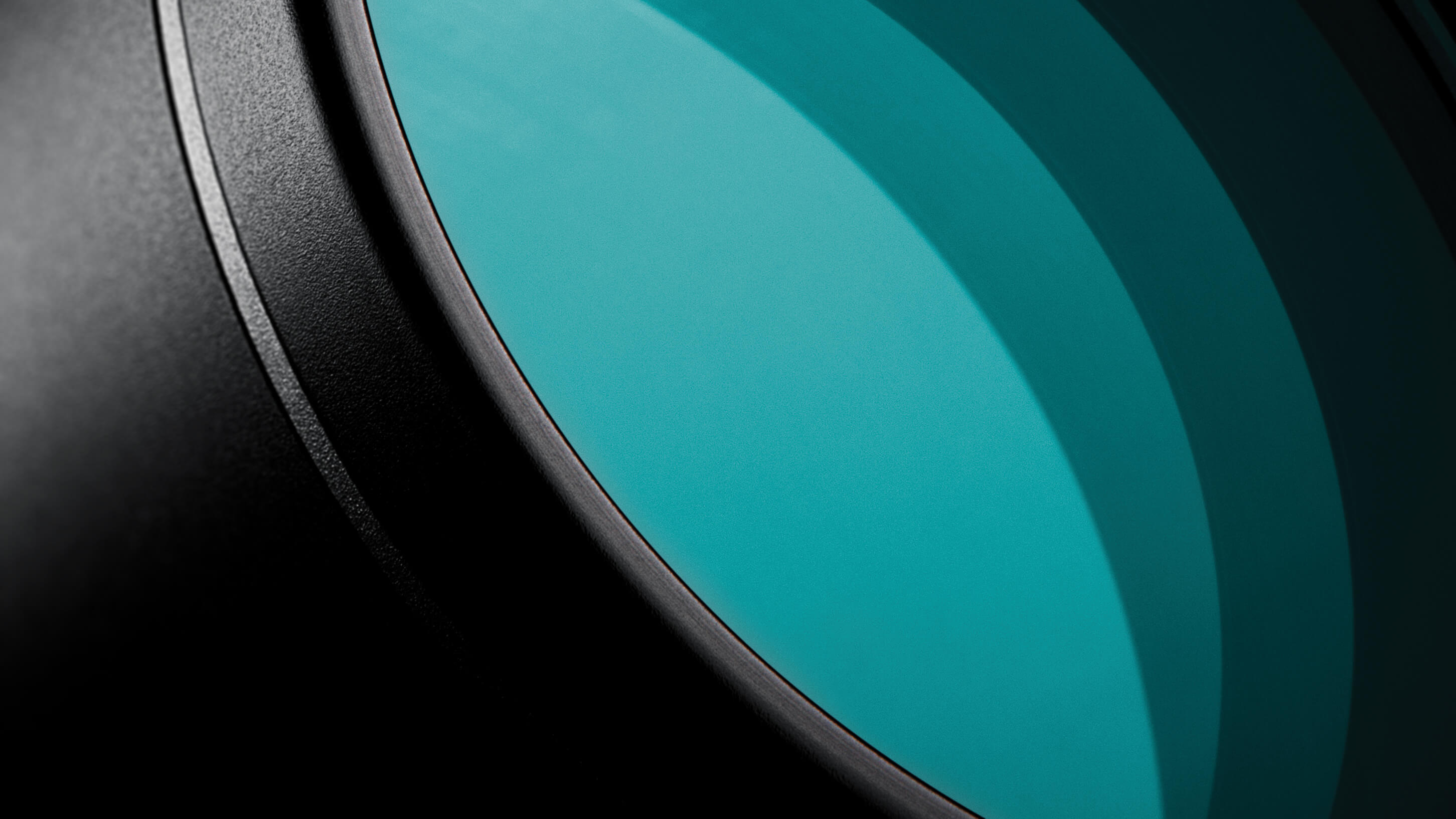
- 30 / 34 mm tube
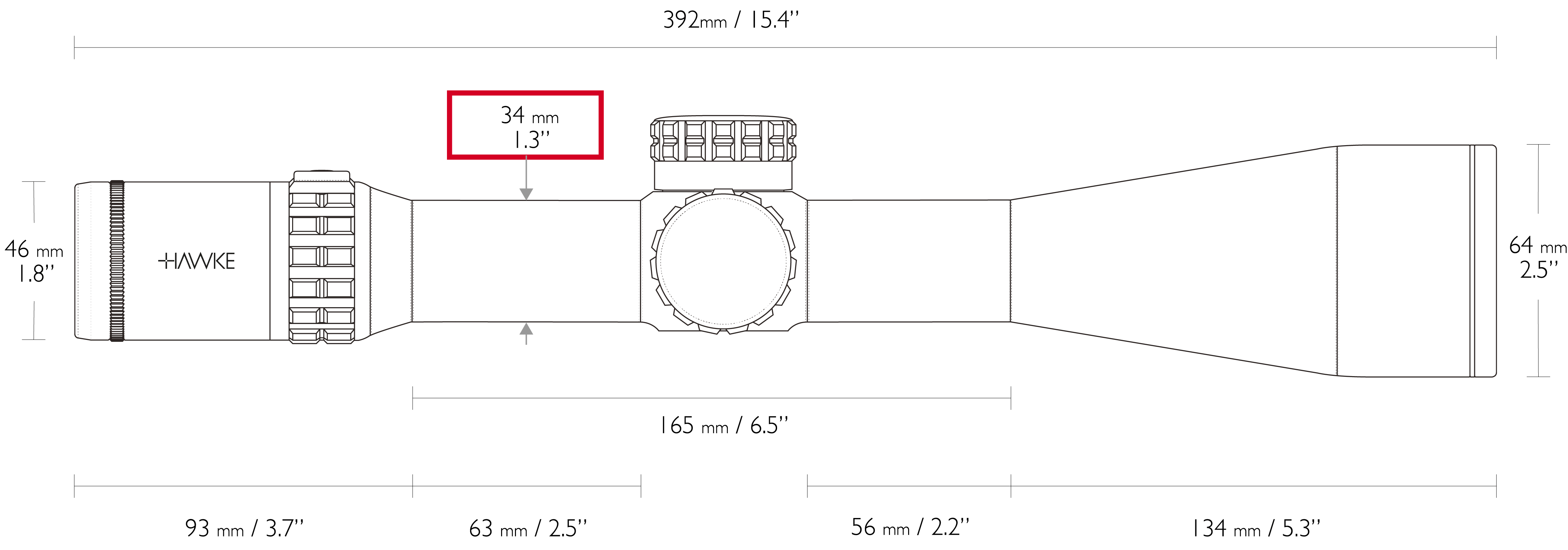
The Frontier series is available with both 30 mm and 34 mm tubes. A 30 mm tube gives a slimmer, lighter scope, while 34 mm allows considerably more elevation adjustment. Imagine a thinner tube sitting inside the outer tube: the more room there is around the inner tube, the more the scope can be adjusted for elevation and windage.
- High magnification
At long range you need high magnification to see the target clearly and place your shot exactly where you want it. The 34 FFP models offer 3-18x and 5-30x zoom, so the shooter can choose the optimal magnification for the task. Too much magnification can be a drawback in high temperatures, however, as mirage (heat shimmer) appears and becomes even more noticeable at high magnification. With a 6x zoom range (e.g. 3-18: 3 x 6 = 18) you can turn the magnification down until the mirage no longer disturbs the image.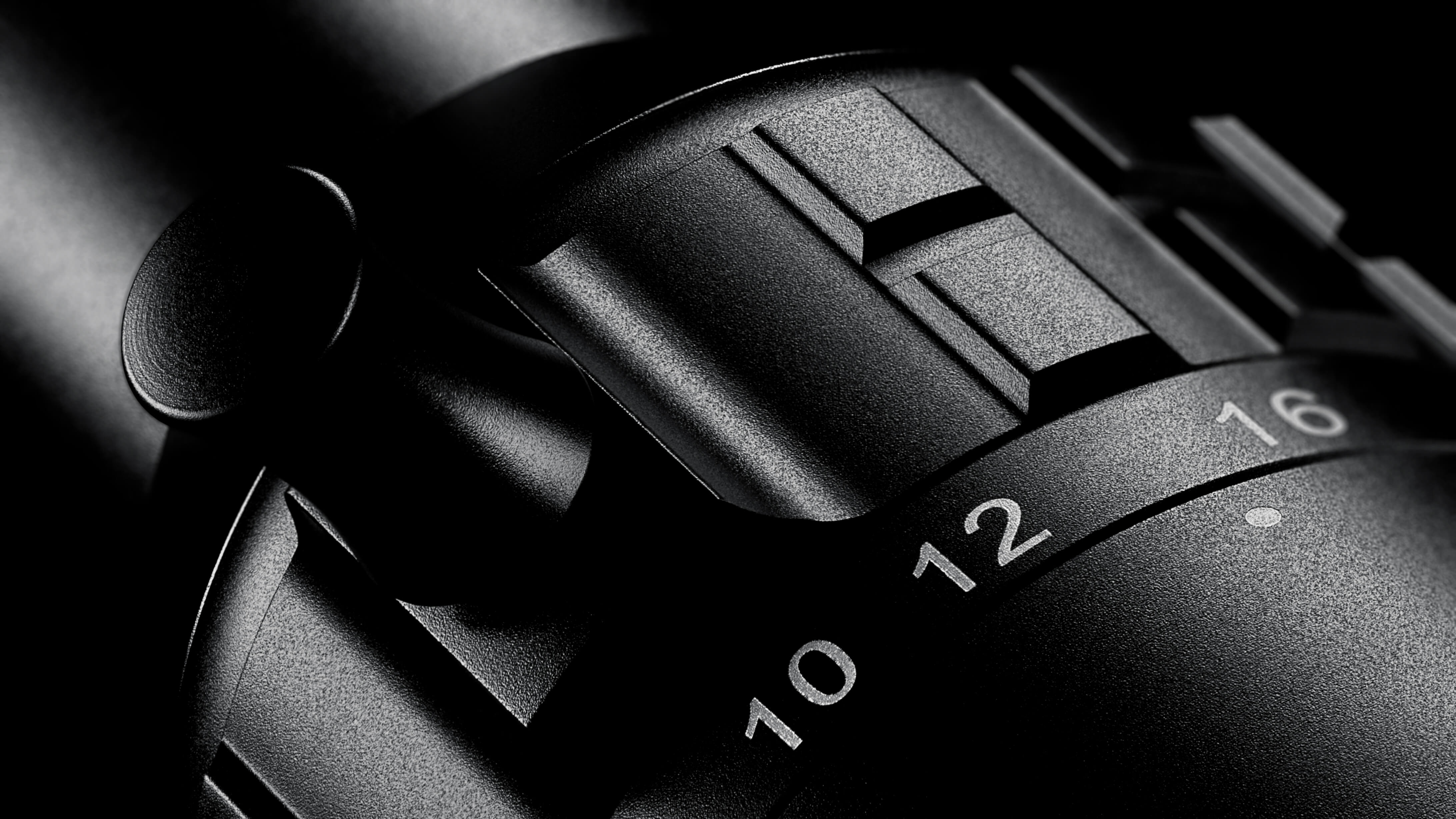
- Zoom lever
A zoom lever is a small supplied throw lever that screws into the zoom ring. With it fitted, you can adjust the zoom quickly and easily without significantly changing your shooting position and having to build it up again. A simple but very practical feature.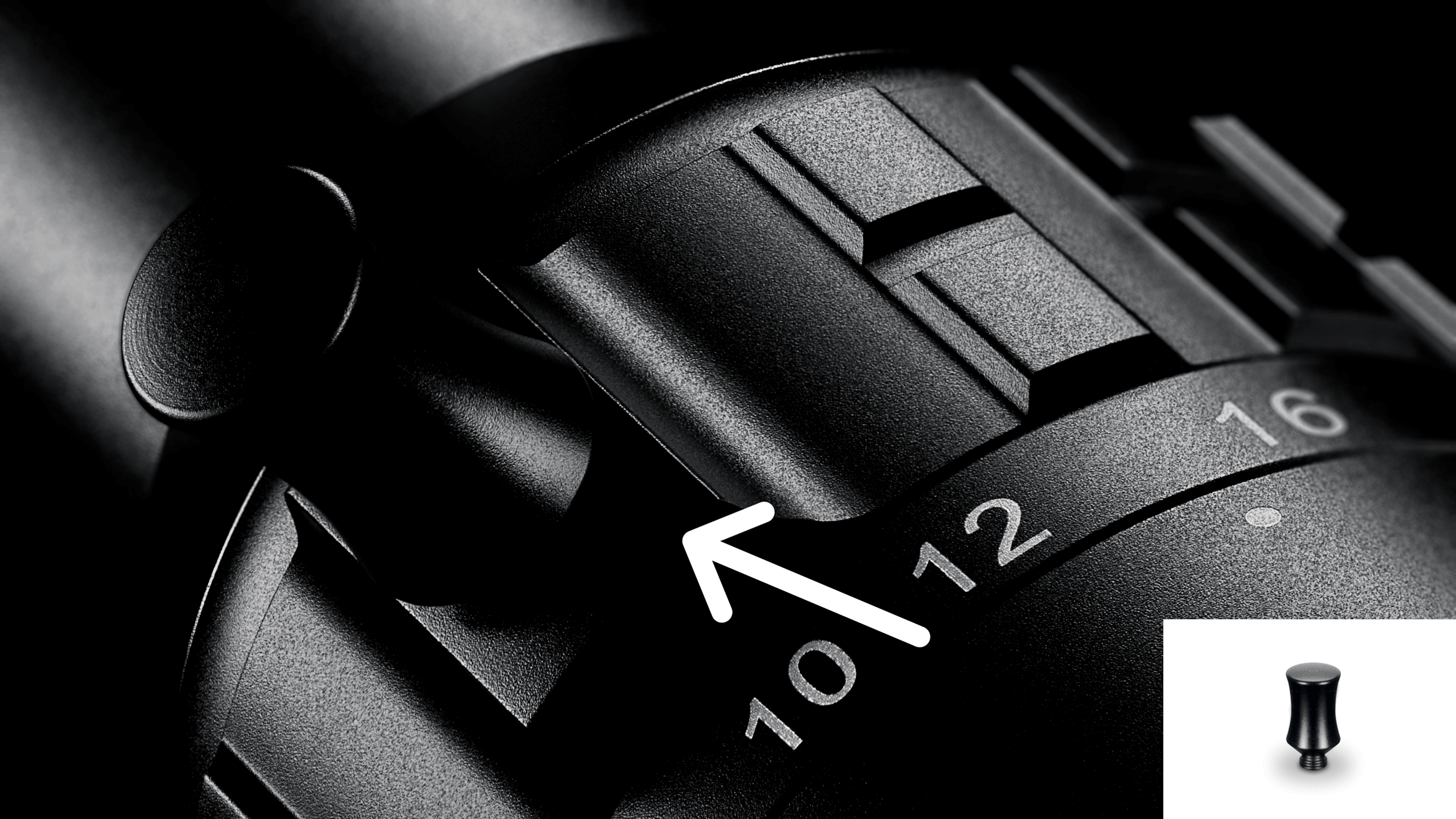
- Parallax adjustment
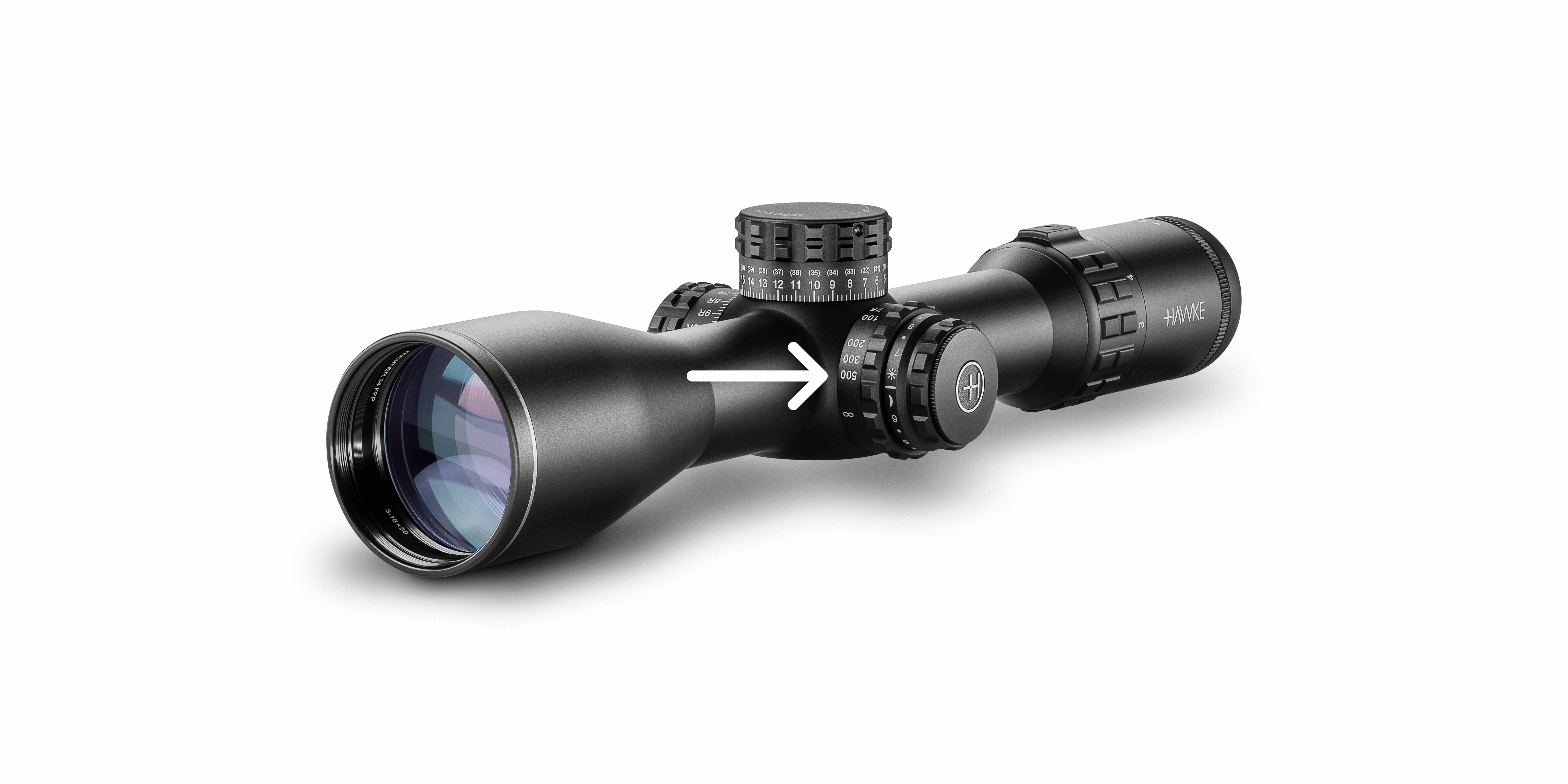
A riflescope is usually parallax-free at 100 metres, or in some cases 100 yards (91.4 m). When shooting at shorter or longer distances, parallax error can occur if the shooter's eye is not perfectly centred behind the scope. This error is removed by adjusting the side wheel so the parallax is set to the correct distance. It also works as a focus adjustment, so the optics are sharp at the correct distance.
- Elevation turret
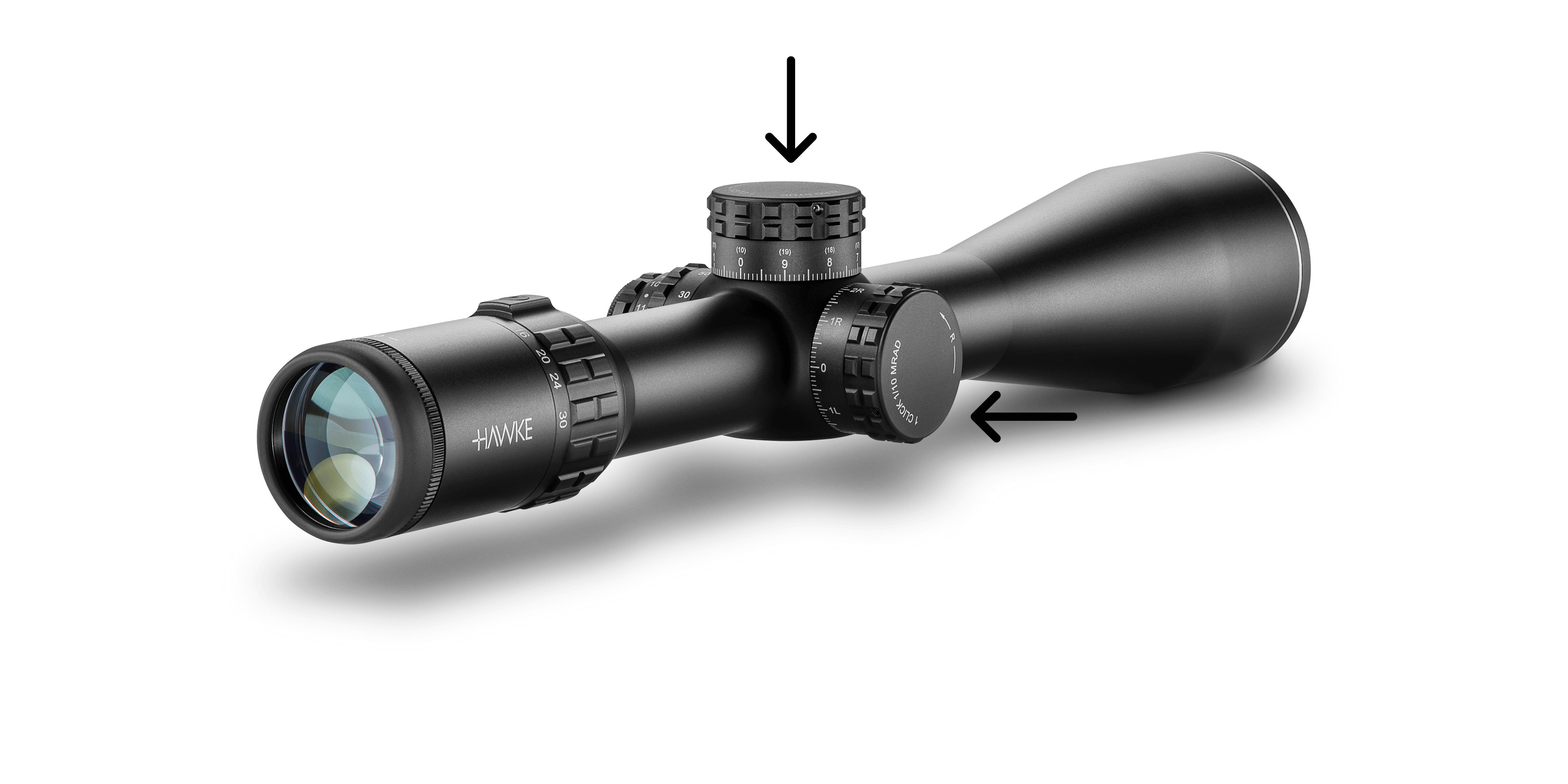
When shooting at different distances, the reticle has to be adjusted to compensate for the bullet's drop at that distance. If the turret is set correctly, the shooter can aim directly at the target whatever the distance. Adjusting elevation requires you to know the ballistics – the bullet drop – of the ammunition you use, and a ballistics program from the ammunition manufacturer is a great help. Lapua, for example, has developed an app that makes this easier. It is important to know the exact muzzle velocity of the ammunition in the rifle you are using.
- Windage turret
Even the slightest crosswind will push the bullet sideways on its way to the target. The longer the distance and the stronger the wind, the more you need to adjust. This takes experience, and a wind meter can be an important tool when distances get long. Alternatively, Lapua's ballistics app can tell you the wind conditions at your location.
- Zero Lock 'n' Stop
Hawke Frontier scopes have a feature in the turrets that ensures you can never adjust the reticle below your chosen zero. If the rifle is zeroed at 100 m, for example, you can always dial back to that zero without worrying about going below 100 m.
The turret caps can also be reset so that 0 equals your zero distance. Watch Hawke's video explaining the "Zero Lock 'n' Stop" feature: https://youtu.be/_rZL5nEej98
- Reticle subtensions
If you don't use the turrets – for example in fast-paced shooting such as PRS, where time matters – a reticle with subtensions is a big advantage. The shooter can quickly judge how much to correct for elevation and windage. Dialling the turrets will always be more precise, but also more time-consuming.

- First focal plane reticle – FFP
For hunting, most shooters choose a reticle in the second focal plane, which means the reticle does not grow with the magnification. But if you use the reticle subtensions, their values for elevation and windage change with the zoom. That is why you should always choose a scope with the reticle in the first focal plane, where the reticle follows the scope's zoom. The reticle takes up more of the image as you increase the magnification, but its values always stay the same. The first focal plane is usually referred to as FFP.

- Eye relief
Hawke Frontier scopes have a long eye relief of 102 mm, which is especially welcome on larger-calibre rifles with more recoil. The shooter doesn't have to worry about the scope hitting the eyebrow and leaving the classic "Weatherby scar", as many call the small scar left once the skin has healed.
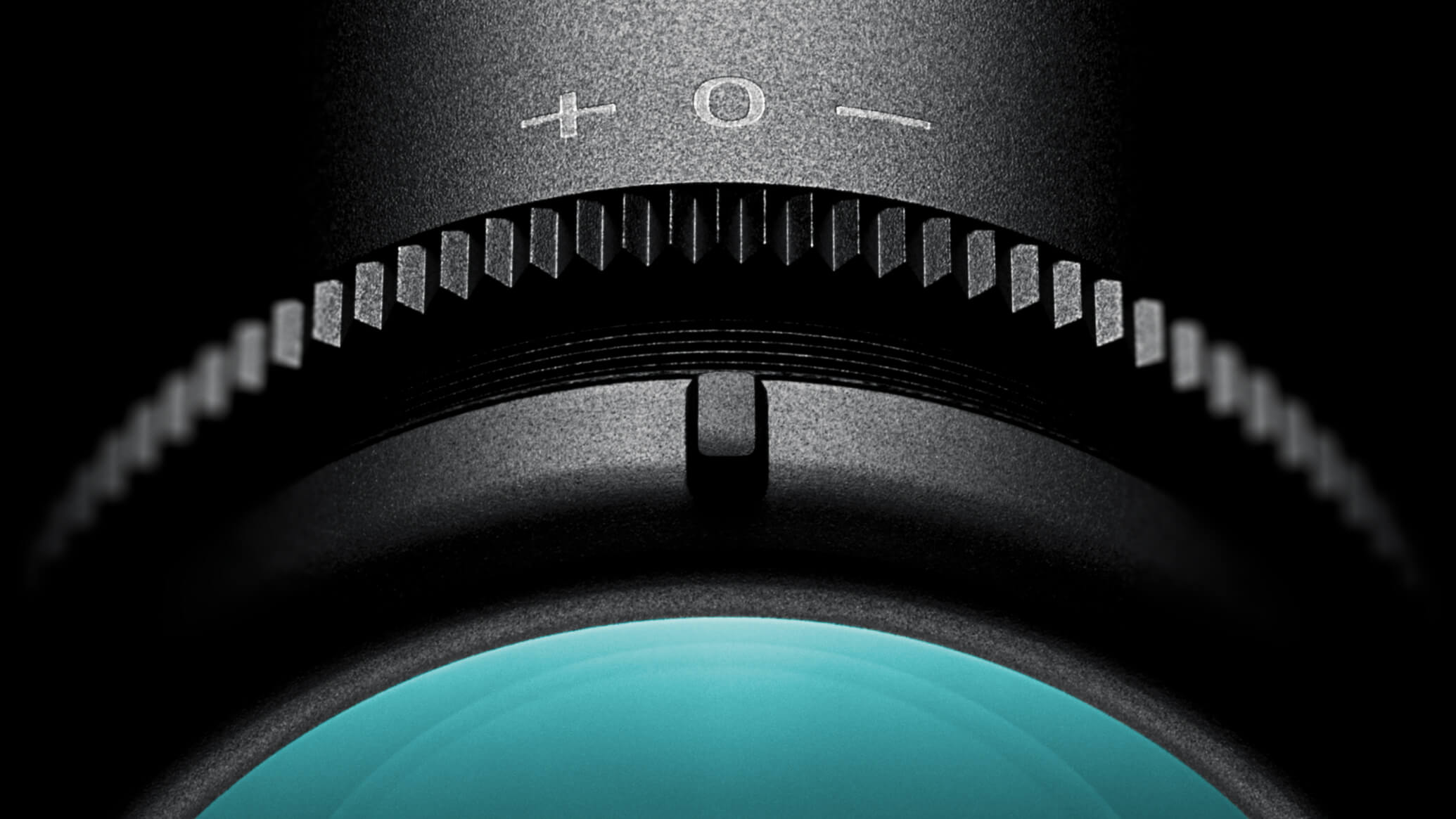
- Dioptre adjustment with locking ring
The dioptre is adjusted to the individual shooter's eye, and the integrated locking ring keeps the setting once it is correct. Set the parallax to the distance you are looking at, then adjust the dioptre until the image is completely sharp. This is individual for each shooter. Afterwards the dioptre is locked, and from then on you only adjust the parallax when the distance to the target changes. This gives you a sharp image at the correct distance.
- Flip-up covers
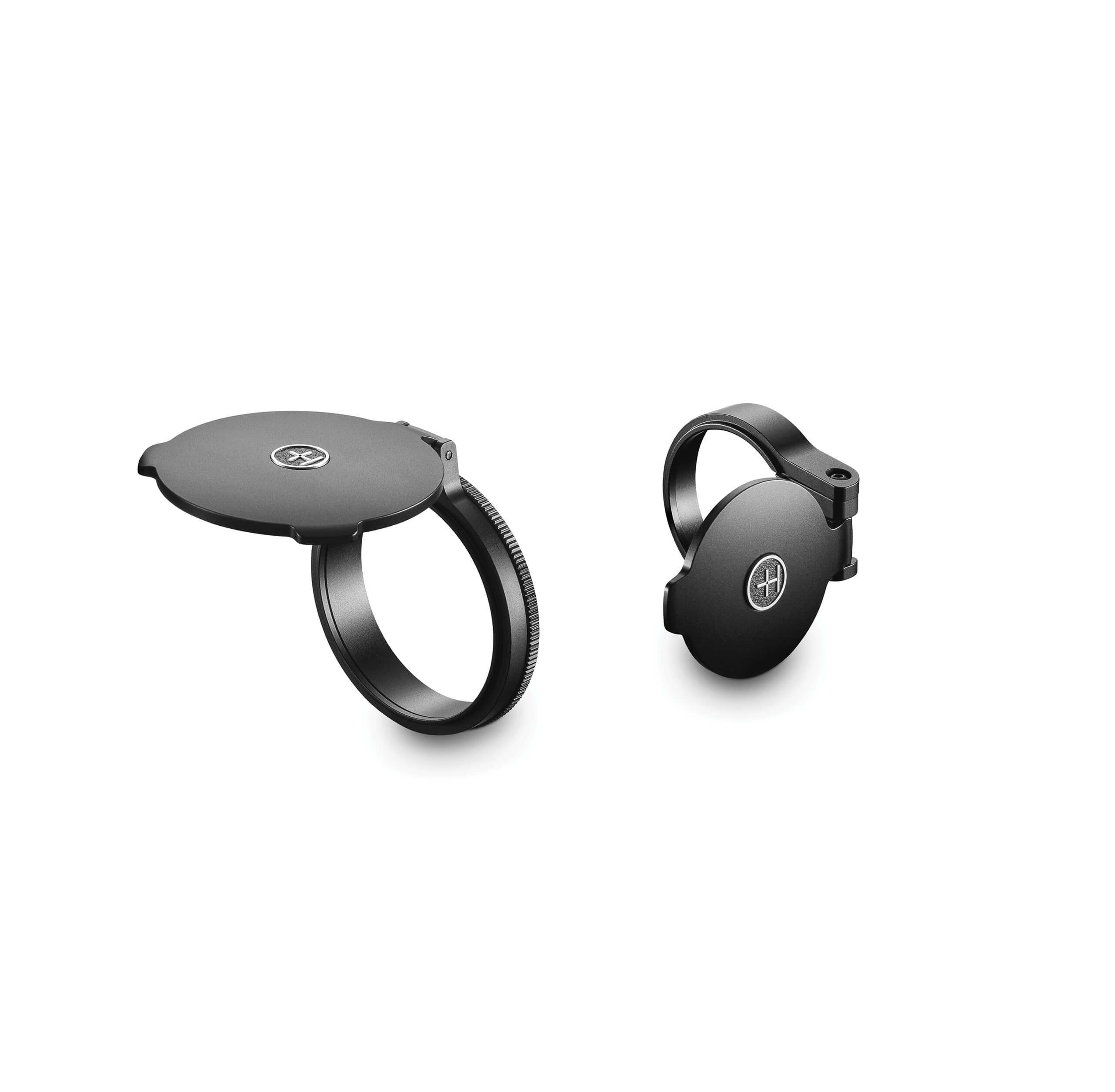
Hawke Frontier scopes come with aluminium flip-up covers for both the objective and the eyepiece lens. They keep dirt off the lenses and water out in the rain. Always keep the lenses clean, as dirty, dusty or wet lenses significantly reduce image quality.
We hope this gives you a better understanding of the features of the Hawke Frontier riflescopes and why a Frontier is a strong choice for your rifle when the distances get long.
Enjoy your shooting.


